Computer science today is as fundamental as electricity or an electric motor — it is both a teaching tool and a field of its own. Its influence on education is potentially enormous. This is exactly where FIPI-Éducation comes in: one of the central initiatives of the FIPI program, giving young learners the chance to build their own Arduino-based solutions for problems from their everyday lives.
After a longer break, the team decided to start a new session — from 1 to 10 June 2025, hosted at the Université Catholique Jean Paul II in Bafang. As in previous editions, the course ran over ten days.
Ten days of workshop.
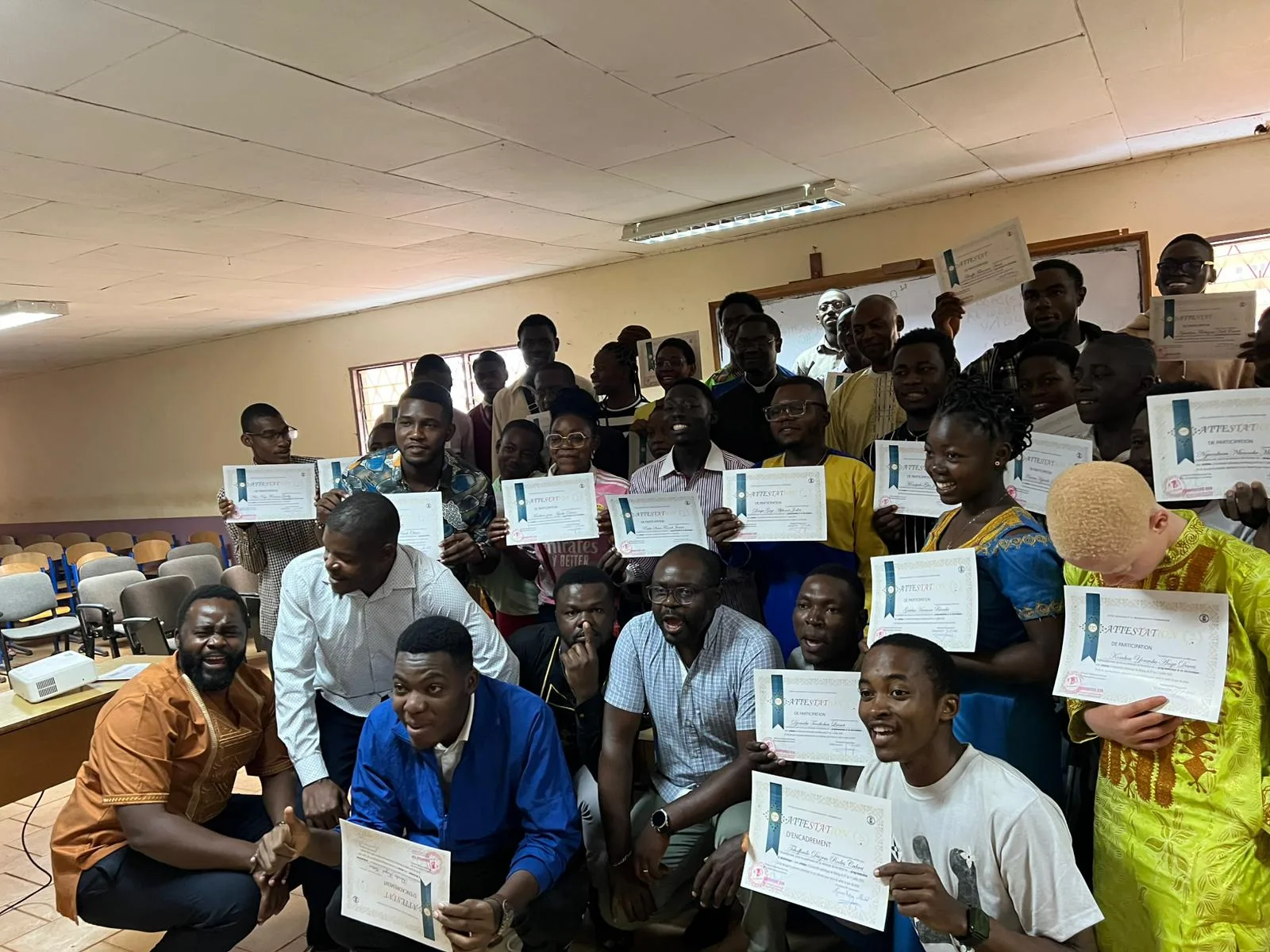
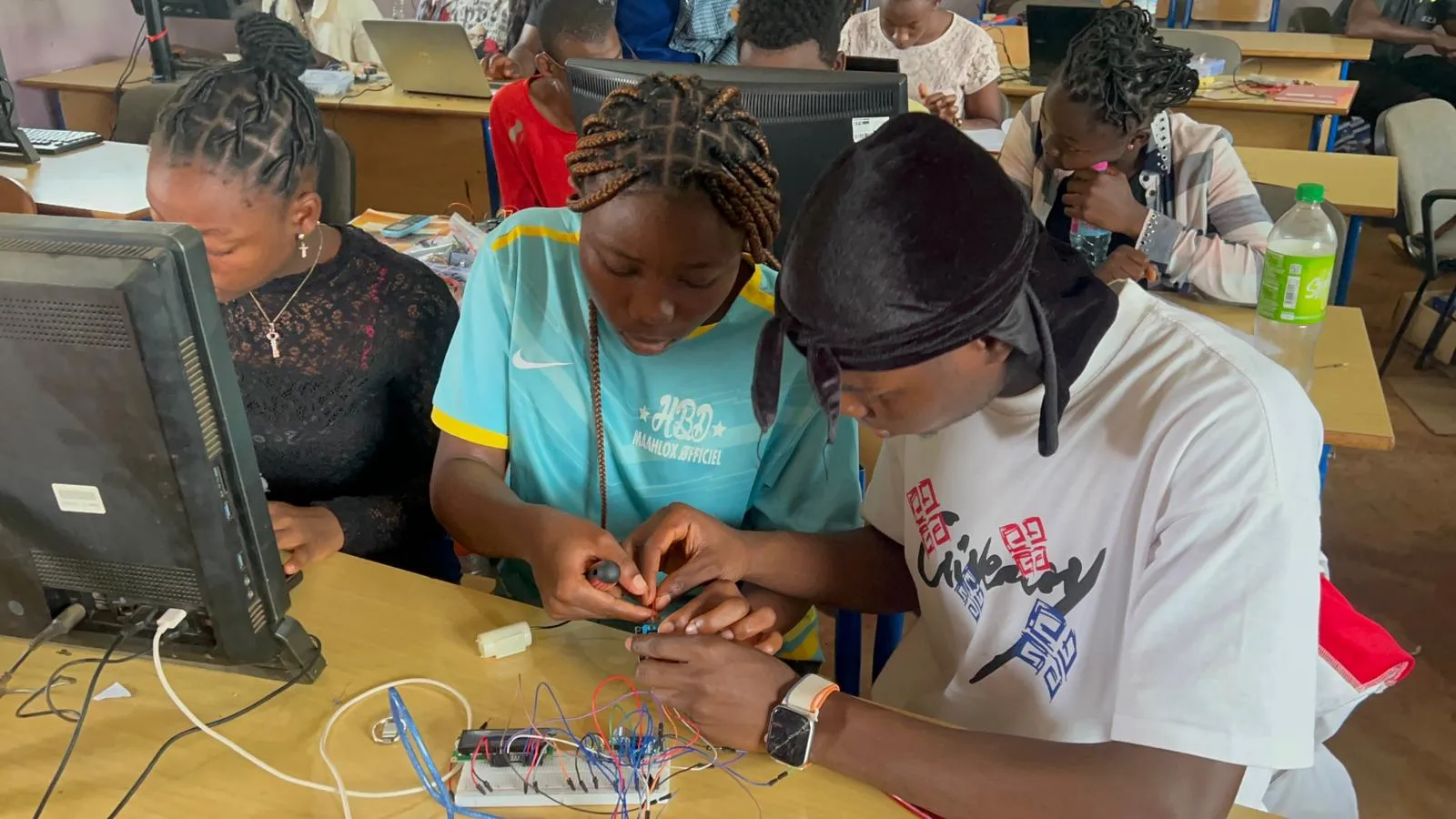
More than 40 learners took part, with an average age of 16, 35% of them young women. Over the ten days they worked through the fundamentals of programming and electronics — from the first circuit on the breadboard to a working prototype of their own.
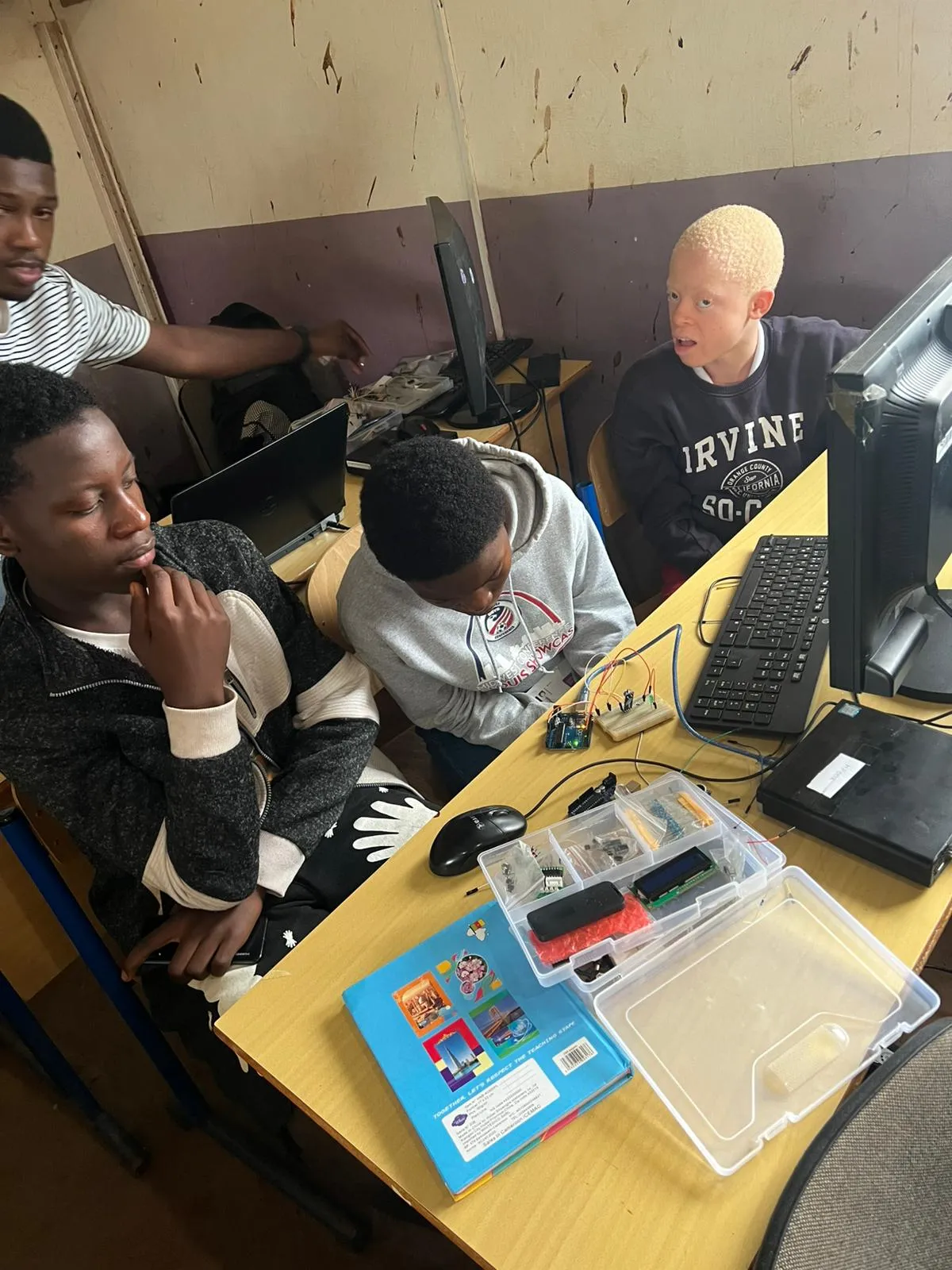
At the end of the workshop, participants presented their results to the public at a dedicated open day.
What emerged.
The participants' projects show just how concrete the connection to their own lives was:
- A water-level display for water towers — an early warning for prolonged supply outages.
- Automatic street lighting.
- In-home light control by phone and/or voice command.
- A radar-principle surveillance system.
- A solar tracker that optimizes power generation from solar panels.
- An automatic irrigation system.
- A three-stage security system: voice, RFID card, fingerprint.
What happens next.
At the close, all participants received a certificate, and supervising staff an Attestat d'Encadrement — presented in the presence of representatives from the university and the church. A further session is being planned, with the goal of permanently anchoring the workshop in the university's annual calendar.