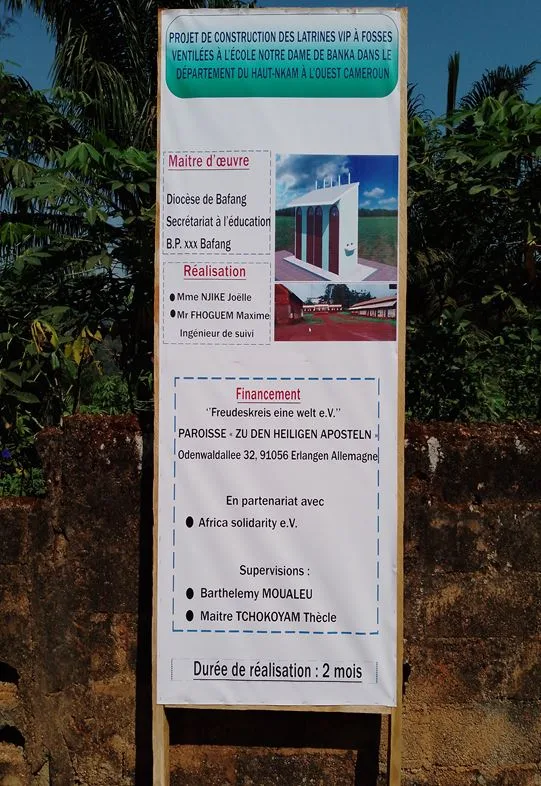
Two toilet stalls for around 700 pupils — that was long the reality at the Catholic primary school "Notre Dame" in Banka, Diocese of Bafang. Long waits, poor building hygiene, boys forced to relieve themselves outdoors. The result: a higher spread of illness and infection at a school already lacking in basic facilities.
Since the collapse of coffee and cocoa prices in the late 1980s, the Cameroonian government has drastically cut subsidies to private schools — a situation that persists to this day. Dilapidated buildings, missing desks, overcrowded classes, staff shortages and decaying infrastructure such as sanitation facilities are the direct consequence. Notre Dame primary school, with 12 classes of around 60 pupils each and a four-stage kindergarten, was no exception.
The solution.
Initial talks about financing a sanitation project began back in 2019, with one clear premise: the solution had to be sustainable. Too often, development aid creates infrastructure that collapses again shortly after due to poorly thought-through concepts. The first concept failed on cost; an alternative was needed — made harder by the rural location and the search for reliable local partners.
In March 2022, the association met a young civil engineer from Banka's municipal building office. She brought in the decisive concept: a Ventilated Improved Pit (VIP) latrine — technically simple, low maintenance, no water connection required.
How it was built.
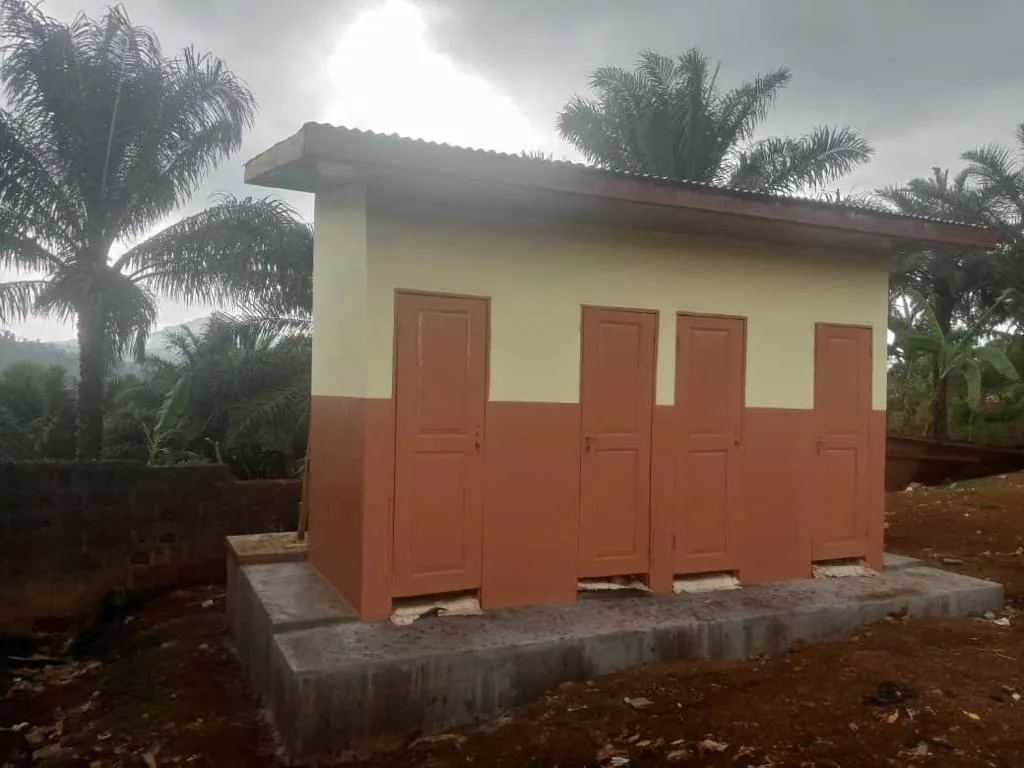
The final concept: four cabins, each with two pits, plus an outdoor washbasin. The principle is as simple as it is effective: once the first pit is full, it's sealed and the second used as a reserve. Meanwhile, microorganisms naturally break the waste in the first pit down into compost. An air-intake and exhaust system keeps the cabins permanently ventilated — without the flies and odor of classic pit latrines.
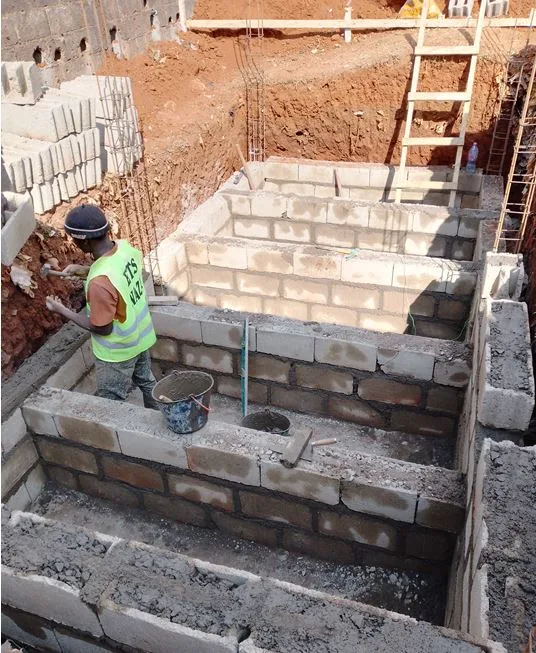
Construction was monitored by an independent specialist, who checked quality and progress at least weekly and reported to Africa Solidarity by phone, live video and email. Interior finishing followed in 2023: laying floors, plastering interior walls, installing sanitary fittings — then exterior plaster, roof, doors, windows and paint.
Handover & impact.
After the final inspection by an independent civil engineer, a short information campaign took place right at the school: children and teachers were trained in health and hygiene — basic techniques such as regular handwashing and clean clothing took center stage, building new awareness of hygiene in everyday school life.
The handover to the school leadership took place in the schoolyard of Notre Dame primary school — with representatives from the school leadership, Africa Solidarity, local authorities and all the pupils. The project was made possible by the Catholic parish Zu den Heiligen Aposteln — Freundeskreis eine Welt from Erlangen.