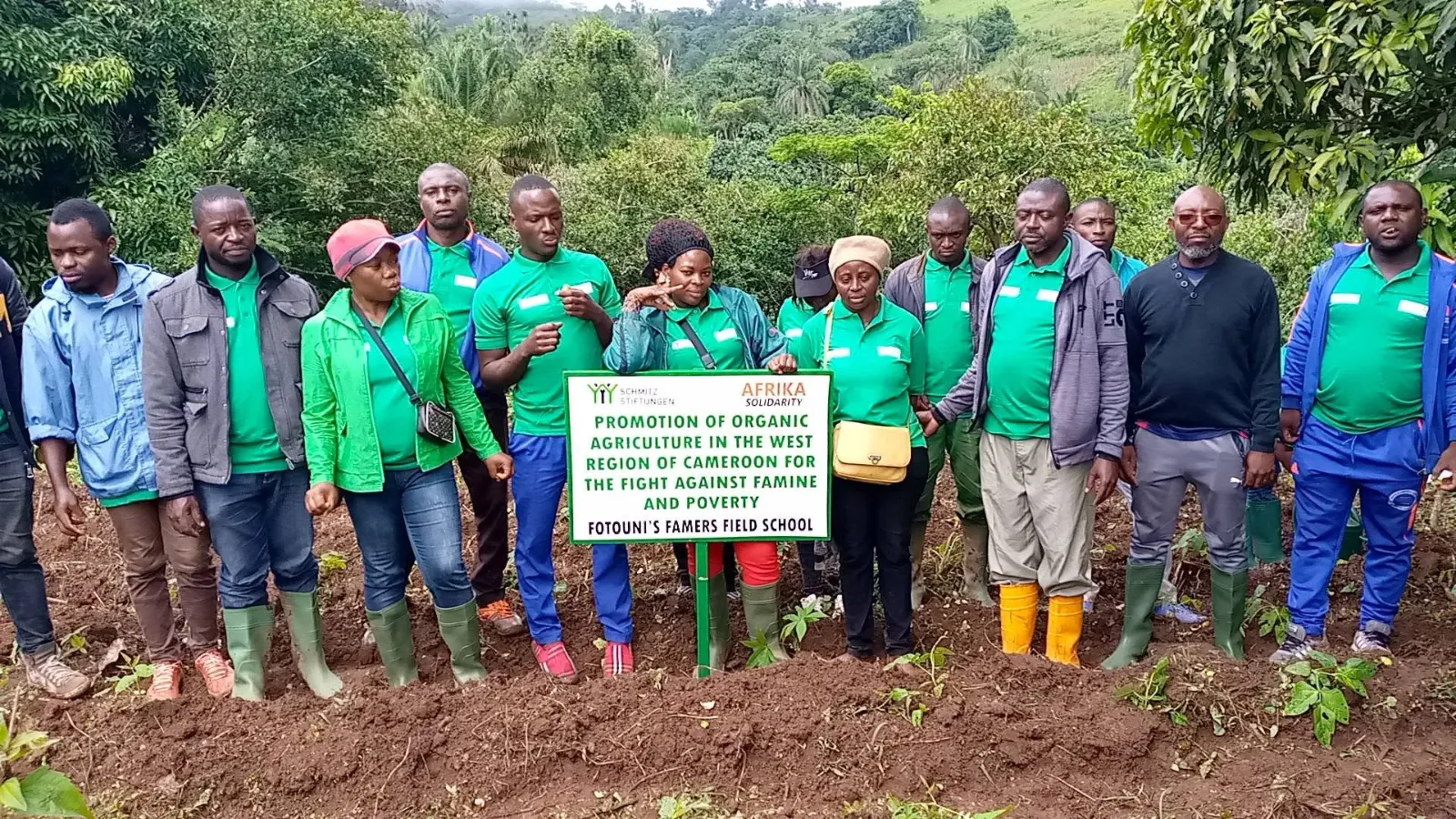
Most reports on development projects end with the handover: completed, inspected, celebrated. But the more interesting question comes after — does it hold up? In 2022 and 2023, together with our partners AAFCOOP and ACODEB, we had supported organic farming in West Cameroon to strengthen young farmers in the fight against hunger and poverty. In 2024, we returned to check exactly that.
The original project pursued three clear sub-goals: training young farmers in organic farming, raising awareness of climate change, and increasing their agricultural productivity. All three goals were considered achieved when the project ended in 2023 — the real test came only with time.
What we found.
Site visits in 2024 showed that the trained young farmers continue to apply what they learned independently. Environmental quality in the target region — especially soil and water — has continued to improve as organic farming spreads further, since the use of hazardous chemicals and pesticides has fallen sharply thanks to organic fertilizers and seed.
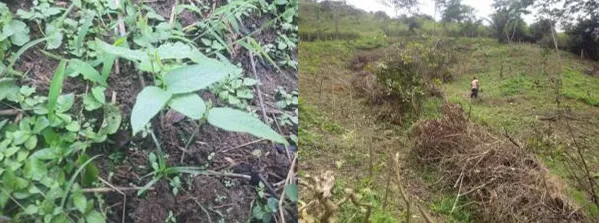
The economics hold up too: organic farming's low investment needs, plus the ability to involve family members in production, keep operating costs low. Crop rotations adapted to current climate conditions bring higher yields than before.
What follows from it.
Lower costs combined with higher productivity leave farmers with more today — part of which goes specifically toward preparing for the next season. Better marketing of their produce also strengthens their influence over the value chain and, with it, their profit margins. The increased household income directly benefits health and quality of life, and more children can attend school more regularly and for longer.
At the end of 2024, our association "Initiative Afrika-Solidarität Deutschland e.V." counted 10 members in total.